
When a child starts struggling in math—or shows potential to move ahead—many parents ask the same question: Is online 1-on-1 math tutoring better, or should we choose an in-person tutor?
The real difference isn’t simply about online versus in-person. What truly matters is the quality of personalization, the teacher’s understanding of each student’s needs, the clarity of the curriculum structure, and whether progress is tracked consistently over time.
1. Quick Answer: What Do Online and In-Person Math Tutoring Actually Look Like?
📌1-on-1 Online Math Tutoring
1-on-1 online math tutoring is usually delivered through a live video classroom, where the teacher works directly with one student in real time.
The teacher can adjust the lesson pace, difficulty level, and teaching approach based on the student’s current ability and learning goals.
High-quality online tutoring should go far beyond simply explaining problems over video.
A strong program begins with structured pre-class preparation, including a diagnostic assessment, curriculum planning, and a personalized learning plan based on each student’s level and goals. During class, teachers should create an interactive learning experience through guided questioning, real-time problem-solving, and opportunities for active student participation.
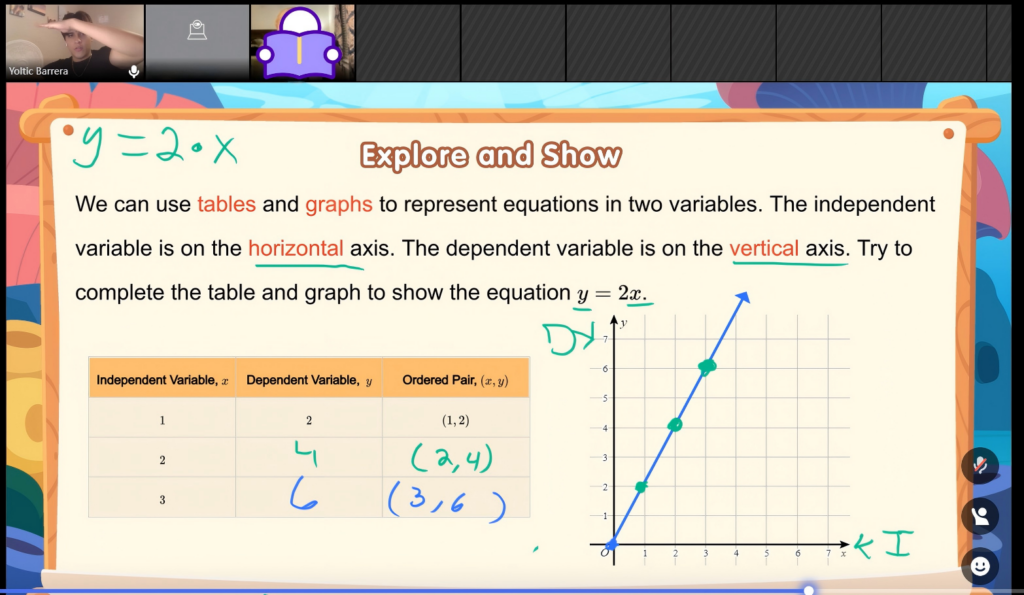
After class, effective tutoring extends beyond the lesson itself—through targeted practice, progress checks, parent feedback, and ongoing plan adjustments—forming a complete learning loop that helps students build understanding, confidence, and achieve measurable progress.
📌In-Person Math Tutoring
This approach is relatively more traditional.
In-person math tutoring takes place face-to-face, with the teacher and student working together in the same physical space. Common formats include local private tutors, learning centers, small-group classes, and in-home tutoring.

The main advantage is direct: in-person interaction. However, in-person tutoring also has limitations. Teacher availability is often restricted by location, scheduling may be less flexible, and progress tracking and parent feedback may not always be as systematic as in a structured tutoring program.
2. Core Differences Between 1-on-1 Online Math Tutoring & In-Person Math Tutoring
Choosing between 1-on-1 online and in-person math tutoring is not just about where the lesson happens.
The best option depends on whether the format helps students stay consistent, receive personalized support, and make measurable progress over time.
Here are five key factors parents should consider.
Flexibility, Convenience, and Consistency
For many families, tutoring has to fit around school, homework, sports, clubs, and family commitments.
In-person math tutoring can create a stable routine through face-to-face meetings, but it often requires transportation and may be harder to adjust when schedules change.
Online 1-on-1 math tutoring removes commute time and makes it easier to schedule lessons after school or on weekends. This flexibility can make a big difference because, in math learning, consistency often matters more than location. When students can attend lessons regularly without travel stress, they are more likely to keep up with practice, fill learning gaps, and build long-term confidence.
Tutor Access and Teaching Fit
Finding the right math tutor nearby can be challenging, especially when a student needs support in a specific area such as Algebra, Geometry, Pre-Algebra, middle school math, or competition preparation.
In-person math tutoring offers a notable advantage: tutors often know local school curricula, grade-level exam structures, and district teaching standards, so they can align every math lesson with the daily learning demands of students at nearby schools. But geography usually limits choices.
1-on-1 online math tutoring gives families access to a wider range of teachers, making it easier to match students with tutors who understand their learning stage, academic goals, and personality. For 1-on-1 learning, this fit is especially important because the tutor’s teaching style can directly affect how comfortable and motivated the student feels.
Student Engagement and Interactive Learning
In-person math tutoring enables direct face-to-face interaction, letting tutors catch students’ confusion instantly and adjust activities on the spot to keep them engaged. However, it will be a relatively traditional and creatively limited form.
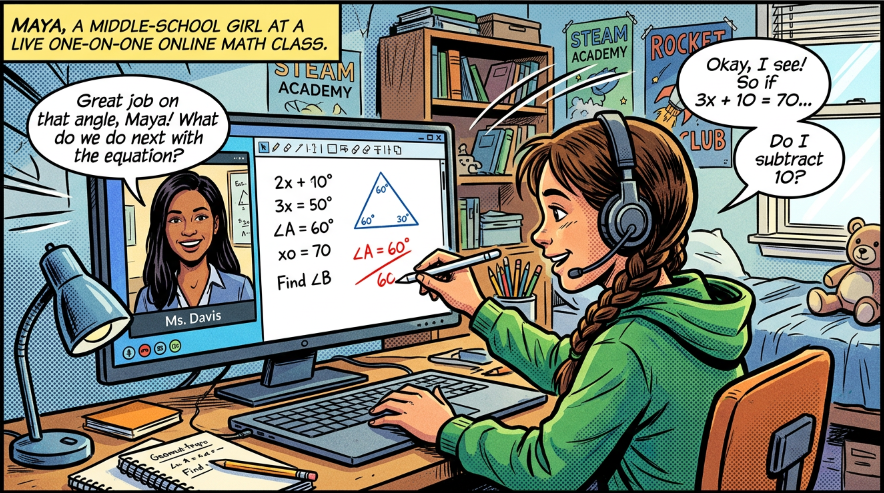
For online one-on-one math tutoring, it will offer more possibilities for interaction. Parents may worry that students will not stay focused online, especially if they are easily distracted. However, student engagement depends less on the format and more on how interactive the lesson is.
For example, students can solve problems with the teacher through live video, digital whiteboards, screen sharing, real-time questions, guided practice, and on-demand lesson playback. These tools allow the tutor to walk through each step, check understanding, and correct mistakes immediately.
Parent Feedback and Progress Tracking
Parents need more than “the lesson went well.” They want to know what their child learned, what improved, what still needs work, and what should happen next.
In-person math tutoring often delivers immediate, informal feedback through quick face-to-face conversations with parents before or after each math class. These short, casual check-ins create natural, approachable communication opportunities, letting guardians get instant updates on their child’s recent classroom performance, tricky math concepts they struggled with, and small improvements observed during the session.
1-on-1 online math tutoring can make progress easier to monitor through lesson records, post-class summaries, periodic assessments, and learning reports. In Think Academy 1-on-1, parents receive post-class summaries, stage-based assessment recaps, and follow-up support. This helps parents, teachers, and learning advisors stay aligned and adjust the learning plan when needed.
3. When In-Person May Be Better?
In-person math tutoring may be a better fit for students who need more hands-on guidance, closer supervision, or a highly structured learning environment.
Some students focus better when they are physically sitting with a tutor, especially if they are easily distracted online or need frequent reminders to stay on task.
Besides, face-to-face tutoring can also make it easier for tutors to read body language, notice confusion quickly, and adjust their teaching style in the moment. For younger students or learners who benefit from direct interaction, an in-person setting may feel more natural and supportive.
Additionally, in-person math tutoring enables tactile, hands-on exploration of abstract math concepts through physical manipulatives — such as geometric models, counting blocks, or logic puzzles — making complex topics more tangible for kinesthetic learners who struggle with screen-only demonstrations.

4. What Makes a Strong Math Tutoring Program?
A strong math tutoring program should not rely on unplanned, session-by-session problem-solving or last-minute test review. A well-structured program, such as Think Academy 1-on-1, includes several important components:
- Diagnostic assessment to understand the student’s current level
- Personalized learning plan based on goals and gaps
- Common Core-aligned curriculum to support school math
- Interactive instruction that keeps students thinking and participating
- Regular practice to reinforce new concepts
- Stage tests to check progress
- Learning feedback after lessons or learning stages
- Progress tracking over time
Why Homework Help Alone Is Not Enough?
Homework help can be useful in the short term. If a student is stuck on a problem tonight or has a quiz tomorrow, reviewing current assignments may help them get through the week.

But if tutoring only focuses on homework questions, deeper issues may remain hidden:
A student struggling with Geometry may actually have weak Algebra skills.
A student making mistakes in Algebra 1 may still have gaps from Pre-Algebra.
Without identifying these root causes, the same problems often recur.
Therefore, an effective math tutoring program should answer five key questions:
- What exactly does the student not understand?
- Why are they struggling with it?
- What prerequisite skills do they need to rebuild?
- What should the student learn next?
- How will we measure real progress?
5. How Think Academy 1-on-1 Online Math Tutoring Supports Students
Think Academy 1-on-1 Online Math Tutoring provides personalized online math support for students who need to catch up, stay on track, or move ahead.
Each student starts with a diagnostic assessment, then receives a customized learning plan based on their current level, school curriculum, and long-term goals.
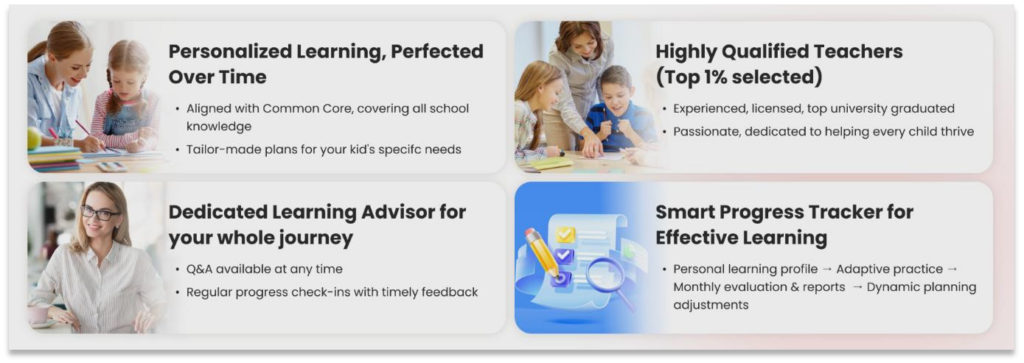
With personalized learning plans tailored to each learner, the 1-on-1 online math tutoring adapts to every student’s pace and needs.
Students will receive targeted guidance, focused attention, and instant feedback on challenging concepts. Consistent teacher-student interaction throughout each session helps reinforce understanding and build confidence.
6. Parents’ Checklist: Questions to Ask Before Choosing a 1-on-1 Math Tutor
- Will there be a diagnostic assessment before lessons start?
- Will my child get a personalized learning plan?
- Is the curriculum aligned with Common Core or school standards?
- Can the tutor support Algebra 1, Geometry, Algebra 2, or AMC prep?
- How often will my child be assessed?
- Will I receive written feedback after each lesson?
- Are lesson recordings or review materials available?
- How does the tutor keep students engaged?
- Can the learning plan be adjusted over time?
- Does the program focus only on homework, or long-term math growth?
Whether your child needs to catch up, move ahead, prepare for an accelerated math track, or start AMC competition training, Think Academy 1-on-1 online math tutoring provides personalized support based on your child’s current level and goals:
Frequently Asked Questions
Q1. What is the main difference between 1-on-1 online math tutoring and traditional private tutoring?
The biggest difference lies in the degree of structure, personalization, and scheduling flexibility. Traditional private tutoring often depends on one tutor’s teaching style and availability. A structured 1-on-1 online math tutoring program can provide personalized lessons, flexible scheduling, progress tracking, and ongoing support, while still giving students direct attention from a dedicated tutor.
Q2. Do younger students do well with online math lessons?
Many younger students can learn effectively online, especially when lessons are interactive and age-appropriate. However, for very young learners, attention span and learning readiness matter. Some younger students may also benefit from light parent support during the first few sessions to help them get comfortable with the online format.
Q3. Can homeschooled students take 1-on-1 online math tutoring?
Yes. Online math tutoring can be a strong option for homeschooled students because lessons can be adapted to their current level, learning pace, and academic goals. Tutors can help reinforce core math skills, introduce new topics, or provide additional challenge beyond the student’s regular homeschool curriculum.
Q4. What math curriculum does a 1-on-1 online tutoring program follow?
A good 1-on-1 program should not rely on a one-size-fits-all curriculum. Instead, it should begin with the student’s level, goals, and learning gaps. Lessons may align with school math standards, upcoming grade-level topics, or specific goals, such as competition preparation, depending on the student’s needs.
Q5. What kind of progress can students expect from 1-on-1 online math tutoring?
Progress depends on the student’s starting point, consistency, and learning goals. Some students may focus on closing knowledge gaps, while others may work on problem-solving skills, confidence, advanced topics, or competition preparation. With regular lessons, practice, and feedback, students can usually expect to understand more clearly and build stronger learning habits over time.






